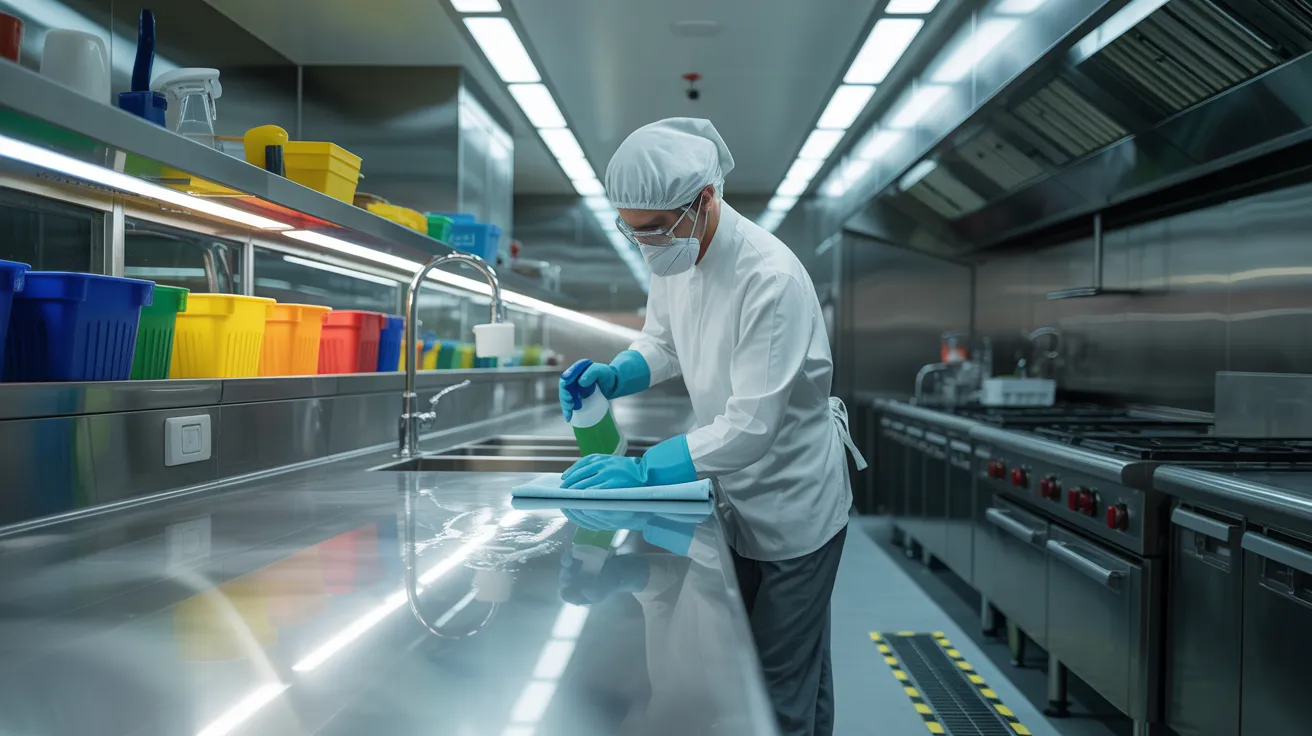
Professional food safety experts located in Brampton help maintain food service establishments, food distribution facilities, baking enterprises, warehouses, and food service vehicles to sanitation standards. They disinfect frequently handled areas, food prep surfaces, equipment, floors, drains, restrooms, and food handling areas with certified chemicals, at proper strength, and using documented contact periods.
Important Highlights
- Brampton sanitation experts assist restaurants, grocery departments, commissaries, warehouses, bakeries, schools, mobile vendors, and allergen-sensitive operations.
- Cross-contamination elimination is ensured by disinfecting high-touch surfaces, food-contact equipment, kitchens, floors, drains, restrooms, and storage areas with zone-based workflows.
- Verification of approved sanitizer dilution, compatibility, and exposure duration is completed by certified providers, with finalization documented using tests, assessments, and action records.
- Sanitation calendars need to follow danger, production volume, switches, releases, and regulations, with routine, weekly, and periodic operations distributed by location.
- Liability, colour-coded implements, hazard analysis knowledge, sanitation expertise, WHMIS training, testimonials, and compliance-ready maintenance paperwork are important vendor qualifications.
What Brampton Facilities Require Food Safety Cleaning?
Any Brampton facility that handles, stores, prepares, packages, or serves food needs sanitation protocols. You must implement it if your establishment falls under public health inspection, food premises regulations, or internal HACCP-based controls. That requirement covers food service venues, employee cafes, supply centers, retail departments, meat shops, fish areas, local stores, and institutional food prep areas.
Proper hygiene protocols continues to be needed in storage facilities, production centers, refrigerated warehouses, bakeries, school nutrition services, event spaces, and delivery hubs. Portable temporary ventures matter as well, examples being mobile kitchens, market vendors, and seasonal booths. Your venue needs established hygiene documentation when your employees prepare supplies, portion finished foods, reheat dishes, or organize allergen inventory. In Brampton, food safety remains not optional; it constitutes regulatory, business, and safety compliance.
What Do Brampton Cleaning Professionals Handle?
Your facility requires professional cleaners who disinfect frequently contacted surfaces, cooking and food prep areas, all floor types, and restrooms to maintain food safety compliance and public health standards. These specific areas are emphasized due to their elevated cross-contamination potential, hazardous walking conditions, and breaches of sanitation codes.
If you comprehend their cleaning services, you'll successfully ensure your operation satisfies required operational and regulatory standards.
Cleaning High-Touch Areas
create a disinfection plan
swapping wipes frequently, maintaining sequential systems, and organizing sanitization equipment by area. These measures keep your disinfection system documented, defensible, and audit-prepared continuously.
Kitchens, Floors, and Restrooms
Brampton cleaning professionals will address kitchens, floors, and restrooms since each space presents different hygiene concerns, injury, and public health challenges. In industrial kitchens, you need degreasing on cook lines, equipment exteriors, drains, prep surfaces, and splash zones to minimize bacterial growth and pest activity.
Professional floor upkeep with documentation is also included. is likewise provided as part of the service.
In restrooms, cleaners disinfect touchpoints, fixtures, partitions, dispensers, and waste containers then restock supplies and control odours. They also maintain restaurant cleaning supply rooms where product storage, sink cleanliness, and drain systems impact daily sanitation standards and worker protection.
Food Safety Cleaning Significance for Brampton Businesses
Brampton facilities require food-safe cleaning standards to meet health code requirements and pass audits. You also minimize bacterial spread through proper cleaning of food-preparation surfaces, appliances, and frequently-touched items. Most importantly, you safeguard public health by lowering the risk of foodborne illness in your facility.
Sanitary Standards Adherence
Since Brampton food companies must follow rigorous sanitary regulations, your cleaning procedures directly determines your competence to adhere to health codes, defend diners, and eliminate regulatory penalties. You must maintain sanitary food-contact surfaces, documented cleaning schedules, correct sanitizer application, and traceable training practices that correspond to municipal and provincial inspection expectations.
Extensive hygiene logs enable you to establish due diligence during regulatory audits and establish your procedures remain reliable, reproducible, and tracked. Proper hygiene practices also enables cross-contamination prevention by decreasing residue on mutual appliances and frequently touched surfaces.
Cross-Contamination Prevention
Adhering to health code standards requires your skill in preventing cross-contamination throughout daily food handling and cleaning. You need to separate raw ingredients from ready-to-eat foods, clean prep surfaces between tasks, and store cleaning supplies separately from food. Organized systems minimize contamination events and maintain ongoing regulatory adherence.
Building allergen segregation prevents key allergens from reaching shared surfaces, containers, or equipment. Utilize dedicated cutting boards, color-coded tools, and strict utensil labeling so staff don't mix items during preparation or service.Mandate hand cleaning following raw meat, seafood, eggs, or allergen-containing products. Swap wiping cloths regularly, and confirm disinfectant efficacy using test strips. When you train staff to follow these controls every shift, you foster a cleaner, more secure operation that meets Brampton's food safety expectations daily.
Public Health Safeguarding
When sanitation efforts weaken, you don't only risk a failed inspection—you raise the likelihood of food contamination affecting customers, staff, and the larger Brampton community. You also weaken your role in safeguarding community wellness, especially in busy food facilities where pathogens travel quickly through surfaces, equipment, and touchpoints.
You need sanitation procedures that remove soils, sanitize correctly, and confirm effectiveness. That means following exposure periods, employing authorized sanitizers, recording cleaning times, and educating employees to meet regulatory standards. These measures facilitate disease prevention by reducing pathogens before they contaminate surfaces or food. In Brampton, rigorous cleaning protects vulnerable populations, prevents disease spread, and enables you to show proper care. When you clean to standard, you don't just meet regulations—you actively reduce risk and support safer food service throughout the region.
How Can Cleaning Practices Ensure Food Safety Compliance?
Prioritizing rigorous cleaning routines reinforces food safety compliance by decreasing contamination threats, limiting pathogen development, and keeping your facility aligned with sanitation requirements under HACCP-based programs and public health regulations. You confirm that contact surfaces stay visibly clean and microbiologically controlled, backing documented preventive controls and inspection readiness.
Cleaning programs additionally bolster allergen mitigation by extracting residues that can lead to undeclared allergen exposure.
How Ought You Schedule Commercial Cleaning Services?
surfaces can collect contamination
Plan seasonal deep cleaning during shutdowns, weather-related soil buildup, or pest-pressure periods
What Should You Look For in Brampton Cleaning Experts?
Screen providers initially by their food-safe sanitation requirements—not budget alone. You need to verify that every company meets CFIA, public health, and HACCP-aligned expectations for your operation. Demand proof of insurance, WHMIS compliance, training records, and management systems. Evaluate technician knowledge of contamination dangers, chemical safety, and documented sanitation practices.
Additionally, you need to evaluate operational reliability and responsibility. Obtain references from food facilities in Brampton, then review response times, corrective-action procedures, and communication standards. Verify the company supports supplier audits and can deliver compliance-ready records when inspectors or external parties need proof. Verify equipment upkeep, color-coded equipment are applied correctly, and location-specific dangers are identified. A qualified provider protects compliance, product quality, and your brand reputation.
What details should a sanitation plan contain?
Develop a written strategy that clarifies every sanitation task, standard, and responsibility prior to production start. You should outline cleaning frequencies, approved chemicals, dilution rates, contact times, tools, and verification methods for each location, surface, and apparatus. Incorporate pre-operational inspections, corrective actions, and employee training requirements.
Your program should also address cross-contamination controls, waste handling, pest-prevention measures, and documented schedules for bathrooms, drainage systems, surfaces, and food-preparation zones. Detail how you'll separate raw and ready-to-eat processes, enable ingredient tracking, and maintain accurate allergen labeling through validated cleaning between product changes. You should assign accountability, maintain signed records, and review results against regulatory standards, HACCP controls, and customer requirements. When gaps appear, update procedures immediately and retrain staff.
Frequently Asked Questions
Are cleaning services offered for nighttime operations in Brampton facilities?
Yes, you material can book cleaning services to manage overnight shifts in Brampton facilities. You'll coordinate nighttime cleaning around operational windows, access controls, and personnel needs. Services generally map overnight logistics to minimize interruption, maintain standards, and record finished work. You should confirm arrival timeframes, management, access protocols, and waste handling before beginning service. If you operate controlled environments, you'll also need documentation that enable audits and compliance verification.
Can sanitation professionals handle emergency spill response?
Yes, you can expect Brampton cleaning experts who offer hazard containment solutions. They handle contamination, evaluate dangers, contain contamination, and start rapid decontamination to reduce exposure and prevent business interruption. You should confirm response times, training certifications, safety procedures, and waste management. If your facility must meet regulatory requirements, choose a provider that records events, maintains regulatory procedures, and enables compliance verification.
Can environmentally safe disinfectants be utilized safely on food preparation areas?
Definitely, green disinfectants function safely on food-handling equipment if you buy items marked food-safe that satisfy regulatory compliant. You should check exposure duration, concentration levels, and rinse protocols before use. Plant based formulas reduce chemical hazards, but you require confirmation of performance against specific pathogens. To maintain residue-free conditions, stick to manufacturer instructions exactly and confirm your disinfecting agent adheres to applicable food industry sanitation standards.
Will maintenance plans respond to production fluctuations?
Absolutely, cleaning schedules enable modification for seasonal variations. Adapt intervals, staffing, chemicals, and validation steps to correspond to production rhythms while preserving compliance standards. Lower operational delays through scheduling disinfection around line changes, peak seasons, and operational patterns. Additionally update SSOPs, employee training, and facility monitoring to address temporary risks, new allergens, or higher contamination levels. Periodic assessments preserve the plan effective.
Will commercial cleaners teach employees on sanitation best practices?
Yes, commercial cleaners typically educate your team on sanitation best practices. You receive staff training on proper chemical use, contact times, contamination control, machine breakdown, and record keeping. They generally follow instruction with HACCP, GMP, and CFIA or regional health department regulations. Many perform hygiene inspections to confirm adherence, identify gaps, and reinforce corrective actions. This allows you to sustain uniform processes, succeed in audits, and minimize contamination hazards regularly.
Conclusion
Through engaging Brampton food safety and commercial cleaning specialists, you do far more than tidy—you ensure your facility for inspections and your standards meet requirements. From kitchen spaces to processing areas, all maintained surfaces and organized zones help prevent pest problems and prevent significant costs. Through scheduling maintenance on suitable timelines and sticking to a solid cleaning plan, you ensure protection for your team, clients, and your good name. In a tightly controlled regulatory landscape, clean conditions cannot be considered optional—they represent good business practice.